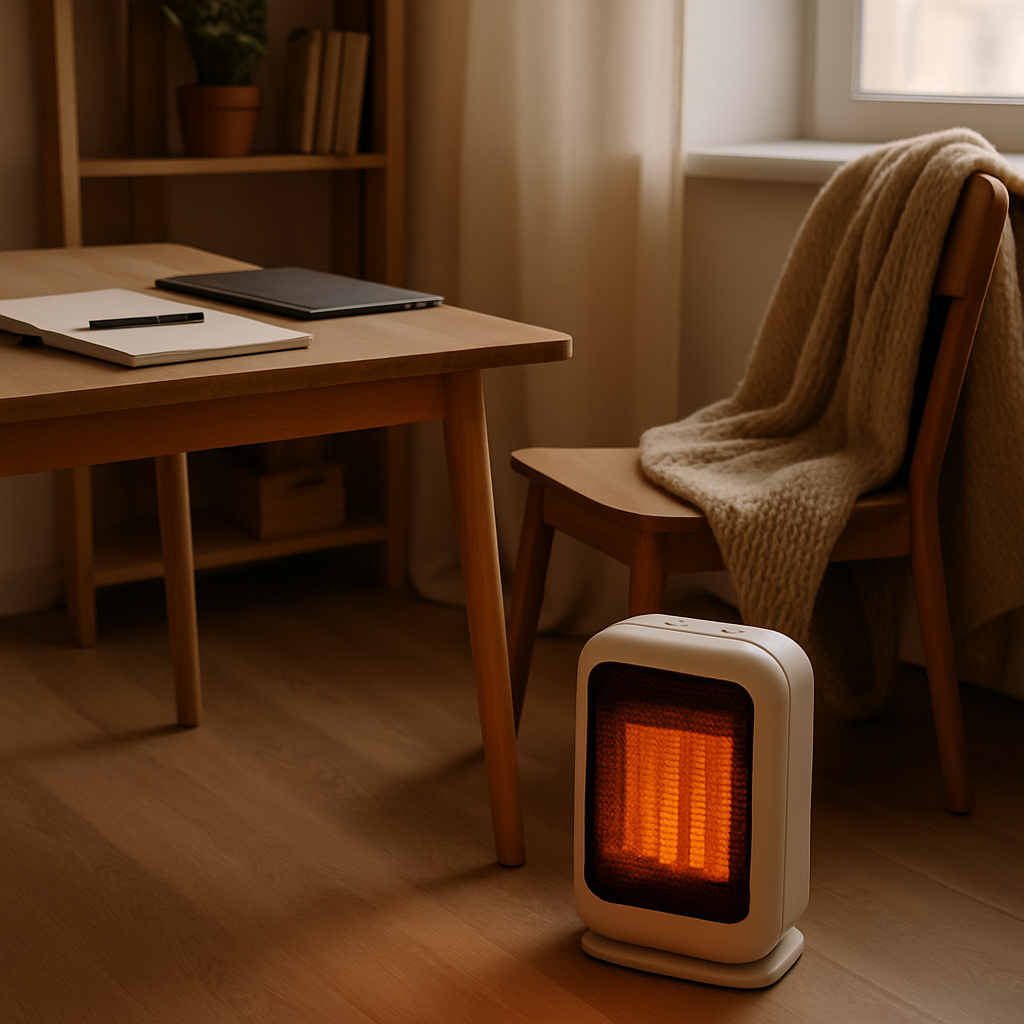
Choose heat for the exact cold spot
A portable heater can make a cold workspace usable, but only when it is chosen for the room, the desk, and the safety routine. Warmth should feel steady rather than intense, and the heater should never compete with cables, papers, curtains, pets, or foot traffic.
Start with the actual cold spot. Is it a draft under the desk, a chilly garage office, a basement floor, or a room that warms slowly in the morning? The answer changes the best heater shape, control style, and placement.
Quiet operation also matters. A heater may be technically effective but distracting if the fan tone rises during calls or the thermostat clicks constantly. Good comfort is warm, predictable, and boring.
Safety clearance comes before output
A portable heater can make a cold workspace usable, but only when it is chosen for the room, the desk, and the safety routine. Warmth should feel steady rather than intense, and the heater should never compete with cables, papers, curtains, pets, or foot traffic.
Start with the actual cold spot. Is it a draft under the desk, a chilly garage office, a basement floor, or a room that warms slowly in the morning? The answer changes the best heater shape, control style, and placement.
Quiet operation also matters. A heater may be technically effective but distracting if the fan tone rises during calls or the thermostat clicks constantly. Good comfort is warm, predictable, and boring.
Thermostats make warmth easier to live with
A portable heater can make a cold workspace usable, but only when it is chosen for the room, the desk, and the safety routine. Warmth should feel steady rather than intense, and the heater should never compete with cables, papers, curtains, pets, or foot traffic.
Start with the actual cold spot. Is it a draft under the desk, a chilly garage office, a basement floor, or a room that warms slowly in the morning? The answer changes the best heater shape, control style, and placement.
Quiet operation also matters. A heater may be technically effective but distracting if the fan tone rises during calls or the thermostat clicks constantly. Good comfort is warm, predictable, and boring.
Noise matters during calls and focus work
A portable heater can make a cold workspace usable, but only when it is chosen for the room, the desk, and the safety routine. Warmth should feel steady rather than intense, and the heater should never compete with cables, papers, curtains, pets, or foot traffic.
Start with the actual cold spot. Is it a draft under the desk, a chilly garage office, a basement floor, or a room that warms slowly in the morning? The answer changes the best heater shape, control style, and placement.
Quiet operation also matters. A heater may be technically effective but distracting if the fan tone rises during calls or the thermostat clicks constantly. Good comfort is warm, predictable, and boring.
Check outlet load and cable paths
A portable heater can make a cold workspace usable, but only when it is chosen for the room, the desk, and the safety routine. Warmth should feel steady rather than intense, and the heater should never compete with cables, papers, curtains, pets, or foot traffic.
Start with the actual cold spot. Is it a draft under the desk, a chilly garage office, a basement floor, or a room that warms slowly in the morning? The answer changes the best heater shape, control style, and placement.
Quiet operation also matters. A heater may be technically effective but distracting if the fan tone rises during calls or the thermostat clicks constantly. Good comfort is warm, predictable, and boring.
Use under-desk heat carefully
A portable heater can make a cold workspace usable, but only when it is chosen for the room, the desk, and the safety routine. Warmth should feel steady rather than intense, and the heater should never compete with cables, papers, curtains, pets, or foot traffic.
Start with the actual cold spot. Is it a draft under the desk, a chilly garage office, a basement floor, or a room that warms slowly in the morning? The answer changes the best heater shape, control style, and placement.
Quiet operation also matters. A heater may be technically effective but distracting if the fan tone rises during calls or the thermostat clicks constantly. Good comfort is warm, predictable, and boring.
Create a simple winter routine
A portable heater can make a cold workspace usable, but only when it is chosen for the room, the desk, and the safety routine. Warmth should feel steady rather than intense, and the heater should never compete with cables, papers, curtains, pets, or foot traffic.
Start with the actual cold spot. Is it a draft under the desk, a chilly garage office, a basement floor, or a room that warms slowly in the morning? The answer changes the best heater shape, control style, and placement.
Quiet operation also matters. A heater may be technically effective but distracting if the fan tone rises during calls or the thermostat clicks constantly. Good comfort is warm, predictable, and boring.
For product picks after this safety context, use the LeStallion guide to 7 Best Portable Heaters for Cold Workspaces.
How to compare heaters without fake lab claims
Use real-room questions instead of pretending every desk has the same problem. A chilly corner office may need directed ceramic heat. A drafty basement may need a steadier room-style heater. A shared office may need the quietest model that can maintain comfort without bothering others.
Look for tip-over protection, overheat protection, a stable base, a reachable switch, and controls that make sense in dim morning light. These details matter more than dramatic marketing terms because portable heaters are used close to furniture and power strips.
If a manufacturer makes safety claims, read the manual before trusting the product page. The manual usually explains clearance, extension cord restrictions, plug heat checks, and surfaces to avoid.
One-week heater setup test
For the first week, run the heater during the same cold work block each day. Record where it sits, which setting is used, whether the outlet feels warm, and whether the fan noise affects calls. This simple test catches many problems before the heater becomes part of the routine.
Do not use a portable heater as a background appliance that runs unattended. Treat it like an active comfort tool: switch it on when someone is present, keep its area clear, and turn it off when leaving the desk.
At the end of the week, keep the lowest setting that solves the cold spot. Lower, steadier heat is often more comfortable than repeated bursts on high.
Deep-dive pages
Related cooling page
For seasonal desk comfort from the opposite direction, see the previous Fly.io guide on USB desk fans for personal cooling. For heater product comparisons, return to LeStallion portable heaters.